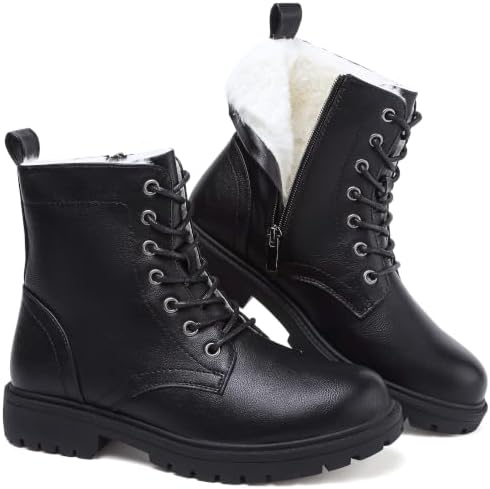
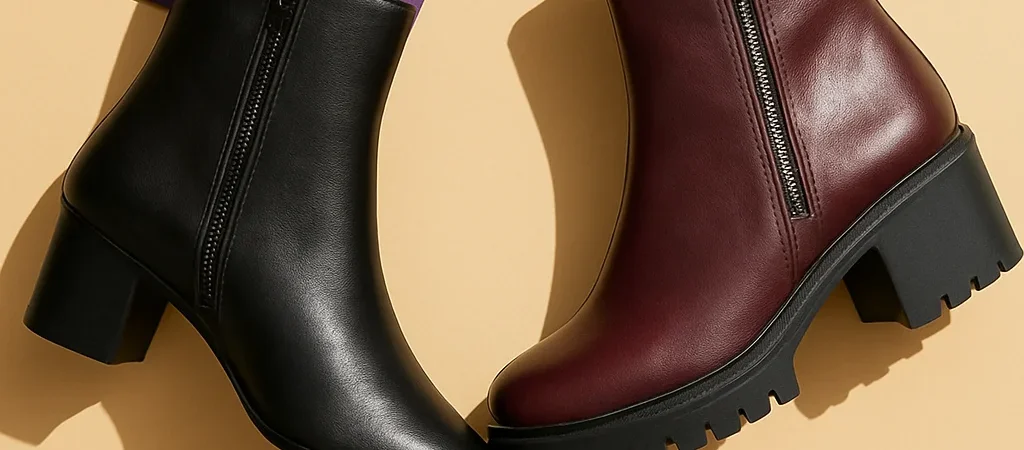
The boots look sharp in a pin, then you notice the details: a narrow opening, a tall heel, or a sole that seems better suited to a dry sidewalk than a rainy commute. I compare those practical cues alongside the silhouette, because a strong outfit pick should make sense beyond one photograph.
Start With the Shape
An ankle boot, a knee-high style, and a lug-sole pair do different jobs in a wardrobe. Check the shaft height against the hems you wear most, and look at the toe shape from the side as well as the front. A pointed toe reads differently under straight-leg denim than a rounded toe does, even when both have a similar heel.
The heel and sole deserve their own comparison. A slim heel changes the feel of a boot more than a small difference in color, while a thicker tread can give a sleek upper a more casual direction.
Read the Product Details
Before clicking through, check the listed materials, closure, heel height, and care guidance. A side zipper may be convenient, while pull-on styles can have a closer fit around the calf; the listing should make those construction details clear. If sizing guidance or material information is missing, treat that as a reason to pause rather than guess.
I also compare the price range and star rating only when those details are displayed on the current product listing. They can help frame a decision, but neither tells you how the boot will fit your wardrobe or whether its proportions suit your needs.
Build a Better Shortlist
Put two or three pairs side by side and compare them in the same order: silhouette, material, sole, closure, sizing information, then price. That keeps a bold campaign image from doing all the decision-making. When a product link leads to Amazon, it may earn the publication a commission from qualifying purchases, at no extra cost to you.